The interesting part of science is the advances they make to try to fix things. What they’re discovering in this article looks like a way to silence genes to promote health. The part that amuses me is where they’re going to make pills to target the parts they want to improve.
Science fact is catching up with science fiction. Star Trek had plenty of little pills or shots to cure what ails – and society does seem to be craving easy solutions to every problem. (Funny, everyone wants to take the easy fix with just a pill, rather than the hard work for actually changing behavior, yet when doctors prescribe medications, they sometimes have trouble getting those same patients to take those doses needed to cure – which leads to some bacteria with strains that are immune to the medicine… but back to the subject.)
I’m waiting for the day when there’s a pill for everything, and we look the other way to get our own solutions. If they do learn to silence the bad genes properl, we could really help a lot of people – but what if by helping them we lose some of the things about our own individuality? We struggle so much, but sometimes that’s what makes us into who we are. On the other hand, it might be nice to take the easy path once in awhile. Medical malpractice might get out of hand, though – “I was looking for the little green pill to help my meory loss, but they gave me the little dark green pill and now I have no recollection of anything, except that pretty pill…”
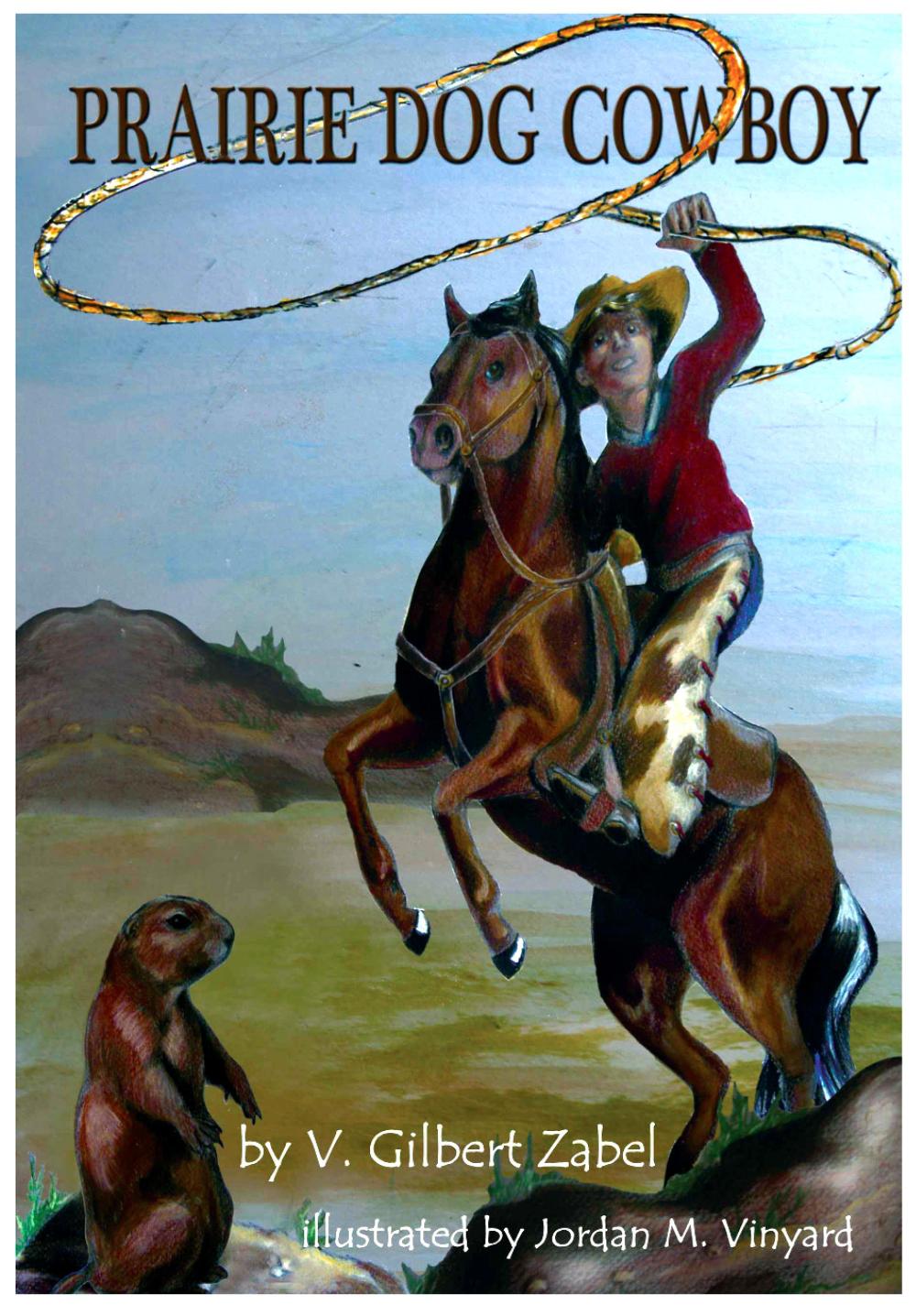
This book is historical fiction, set in 1899. Ranching has changed over the years, and how it affects the life of the kids who work them with their families changes, too. Vivian pieced together a typical day for Buddy Roberts. Be sure to comment on this blog and the others on the tour – there will be a drawing for canvas bags. You’ll want to leave a way to contact you if you win, as well. Good luck!
What is a typical day like?
Before Buddy started to school, and before fences had been strung around the pastures, he would be up before daylight to help milk the cows. After breakfast, he and his dog, Patch, would herd the few cows and their calves (if there were any) to the pasture. In winter, Buddy would construct an “igloo” of tumble weeds which were held together by snow and ice when available. The boy would huddle inside with his dog, who would be able to tell if one of the cows wandered away. Then boy and dog would run after the cow and bring her back.
Sometimes he might have lunch of whatever was left from breakfast, food that he brought with him. Other times, a neighboring rancher would bring something hot for him to eat.
Late in the afternoon, Buddy and Patch would herd the cows home and put them in the corral. If the water in the trough had frozen, the boy would break the ice so the cattle could drink. Then he would help with the night milking, feed and water the chickens before finally having supper. After supper he headed for bed.
By the time Buddy started to school, the rancher to the south of the farm and some of Buddy’s uncles fenced the pastures. Buddy would feed and water chickens and herd the cows to the pasture after helping with the morning milking. Then he ate breakfast and rode to school with his friends. After he got home, he did chores including herding the cows home on foot with Patches help.
Once Buddy worked on the ranch, he usually stayed there except on weekends, when he returned to the farm to do the heavy farming.
How old is he?
At the beginning of the book, Buddy isn’t quite five years old. By the end of the book, he’s eighteen.
Does he enjoy ranching?
All Buddy ever wanted to do was be a cowboy, and to farm part of the homestead that he thought he would share with his older brother some day.
When did he start working out there?
Buddy never knew anything but work. The life in frontier days was hard, and children started working from an early age. However, he never complained — except when he finally was able to work on the ranch for Caleb Hyman and Caleb asked him to move large rocks out of the roadway so that the wagon wheels wouldn’t break. Buddy didn’t think that was work for a cowboy.
Buddy started “cowboying” with his best friends Craig and Cody Hyman when he was about ten.
When did he stop schooling?
Due to Caleb’s influence, Buddy attended school through the twelfth grade. He refused, though, to allow Caleb send him to college with the twins.
Most children didn’t attend school past the eighth grade, if they attended that long. Often, too, children attended sporadically. Buddy was fortunate because the Hyman’s took him into their family with their children and expected him to attend school.
All this fascinates me, especially because I grew up on a farm. Many kids still start work at a young age, but mostly just by helping their parents with chores. My brother-in-law raises sheep – my niece started around age four accompanying him during the afternoon or on weekends. However, today’s children finish school through college, even if their intention is to go back to the farm or ranch they came from to work. Many can learn more about the animals or crops they tend during those high school and college years.
This book is available at Amazon and directly through 4RV Publishing, LLC. Be sure to check it out and see the beauty of old time ranching, along with the toughness of the people who helped tame the land.
Staying at home sometimes seems to be viewed by those in Corporate America to be a slacker way to go. I think it can be harder to stay at home and still get things done like I’d like, but I keep trying.
When you go to work, you often have set hours. You definitely get a scenery change. Someone sets goals and you meet them.
At home, I do all of that myself. I set my own goals and reach them. I set my own hours depending on what I need to get accomplished, but sometimes things like grocery shopping get in the way. Or the doctor appointment I expected to be out of the house for a total of one hour and ended up spending two hours only in the office.
Stress is an external factor at a corporate position, but it becomes much more internalized when I stay at home. If I don’t make my goals, there is no one to blame but me. I focus on what I want to achieve and try to find another way to do it in the time I have allotted, which is never easy.
I think the few who think I’m slacking by staying at home just don’t know how much work it is. Okay, I can’t keep up with my housework because I’m generally trying to spend that time writing. I also get a little leeway because I’m eight months pregnant. Sometimes I just have to accept that not sleeping all day is a pretty good goal.
Hey – I blogged today. What else do I need to do? I could rattle off the list, but most of it is baby-related rather than writing-related. Better luck tomorrow.
The intricacies of language are fascinating. I may work mostly with the modern written word, but there are always things to learn from other aspects of language.
The site linked below shows so many different ancient scripts and talks about phonetics. All the questions you might have never thought about – answered.
Sometimes it’s about wasting time on a Friday. (Is there any better thing to do?) Others just have a burning desire to learn about languages, ancient or otherwise.
It makes me wonder what the languages will be in the future – if we stay around that long.
How many words do you need to tell a story? Flash Fiction sets the bar higher (or lower in the case of word count) than any other type of story.
There are so many categories of stories that have nothing to do with genre: flash fiction, short story, novelette, novella, novel, and I’m sure I don’t have them all. Vignettes and povels, while related, give me the impression of having their own categories.
Flash Fiction is a favorite of mine, partly because the challenge of the word count is what makes or breaks the piece. It may be shorter than any other story you’ve encountered, but it still requires a beginning, middle and end. It’s a great exercise in how to make every single word count.
The downside is sometimes words have to count for too much. Such short pieces rely heavily on the reader to fill in some of the blanks. While I like it, flash fiction can get the reader to author to forget what’s needed in longer stories to make them shine. Balance is always needed.
The shortest story I’ve ever heard of? Ernest Hemingway’s 6 word ditty: “For sale: baby shoes, never worn.”
I’m no Hemingway (I think everyone knew that) and I’ve never written anything nearly that short. My shortest to date is 55 words, and an example is below.
Dirty Little Secret
“I have a friend you’d adore, Mara.”
“Maybe.”
“What’s wrong with one date?”
Mara remembered a tall man with blue eyes. Staring across the table at his wife’s ring, she smiled. She preferred her friends to think her picky than to know she loved someone she couldn’t have. “I’ll let you know when I’m ready.”
I remember spending hours in libraries when I was young. Wait- I still do.
Do you ever wonder what books end up there? Who chooses them? Why?
A library seems like a magical place to those who love words. Anything can be discovered within those walls, among the shelves. You only need to figure out where to look, and the librarian is a good person to help.
At least, the good librarians do. Sometimes we run across the ones who hold books more sacred than the bookworms – who refuse to let the solace of the library be disturbed for any reason. Luckily, those seem to be few and far between.
How much do you think about names? Still working on a compromise with my husband about the baby’s name, but the subject comes up often for me when I choose characters.
One thing that holds me back is I don’t want characters with the same name as my child, so I reserve names in hope that I might use them for the baby until I realize I’ll never talk my husband into it.
When the subject comes up with other writers, I learn how they look at characters differently than I do. Something in my head has to match the character’s personality with my feelings about the name. (Though this doesn’t always mean I hate the names I give characters I don’t like!) Some use random name generators to get what they need, while others can’t even begin the story until they find the name that fits the character in their heads.
I find myself in the middle. While I work for names early on, most of them come intuitively as the character emerges, and others get changed later if I find they don’t fit at a later time in the writing. Rarely I have unnamed characters in a flash fiction bit – but flash fiction is in a category of its own and sometimes names aren’t needed.
More about flash fiction later.
Have you ever thought about names so much? Sometimes I wonder if it’s just me, or the writer I am, or something that can be shared with others at all.
They’re wonderful tools in fiction, but the scientists are doing their best to catch up to the writers’ imaginations. I find it amazing they’ve figured out how to make the robot respond with seeming empathy to stimuli.
Of course they have a bit to go for looks. Their current picture looks like a lego guy with Einstein’s face attached. Definitely an oddity.
Scientists aren’t always known for their aesthetic values, though. They’re the ‘function’ lot. When they let the fashion gurus in, the clashes begin because the process of prettying up the prototype often involves difficult changes to the functional part of the machine.
Bugs the heck out of engineers to figure out how to make things work once that new design has that polished look. There is no end to the work!
Yes, the movie. My husband watches it while I’m writing. It isn’t one of my favorites, which makes it easier to focus on other things.
I’d forgotten how amusing the beginning was, with the script that wasn’t finished for the radio production that’s ongoing. They don’t really do scripts that way – they always have it written in advance. I’m sure there have been a fair share of winging it.
I wasn’t one for improv during speech or music classes, but it seems one of those things that get easier with time and familiarity. The first few times I taught yoga I had everything planned far in advance, but after a couple years I didn’t even need the paper in front of me, though I preferred that to announcing poses off the cuff.
Every movie must have some redeeming qualities. Quote: “Back to the word-factory.”
Do you think non-writers like to see the glimpses of the writing life they see in movies, tv, and books? Do they prefer our depictions of other professions? I suppose we all write what we know, so some writers write about writing. I find I like to write about artists, though i don’t do much art (in the sense of drawing or painting or the like) anymore. I ought to write more engineers – but I just haven’t found the right spot to put them yet.
I chatted with a friend the other day about using the word “I” as a tool to get a point across. She gave up using the first person perspective in her poetry because all the people she critiqued it with- including college professors- thought that meant it was a true story from her perspective.
I was a little amazed at that. In stories or poetry I tend to use the first-person as a different way to tell the story, rather than a truthful telling, but it really made me think about the run-of-the-mill authors who use it in that way and things I’ve heard about first-person.
If 90% of amateurs use first-person perspective, are they writing what they know and doing a somewhat truthful account of something? That really lowers my value of some of those amateur fiction accounts. I think when the first-person is done well it can really sell a story (even literally!) but it isn’t often handled with the necessary care. I’m betting that’s why most of the fiction we see published is in 3rd person limited viewpoint (about 90%).
I am a storyteller. Just because I write something, doesn’t mean it exists anywhere but my mind. If you believe it’s real, so much the better for my ability to weave a tale. Never confuse the written words with the author behind them – the best ones will always make you wonder.
 Ransom Noble