Old Navy and my birthday…

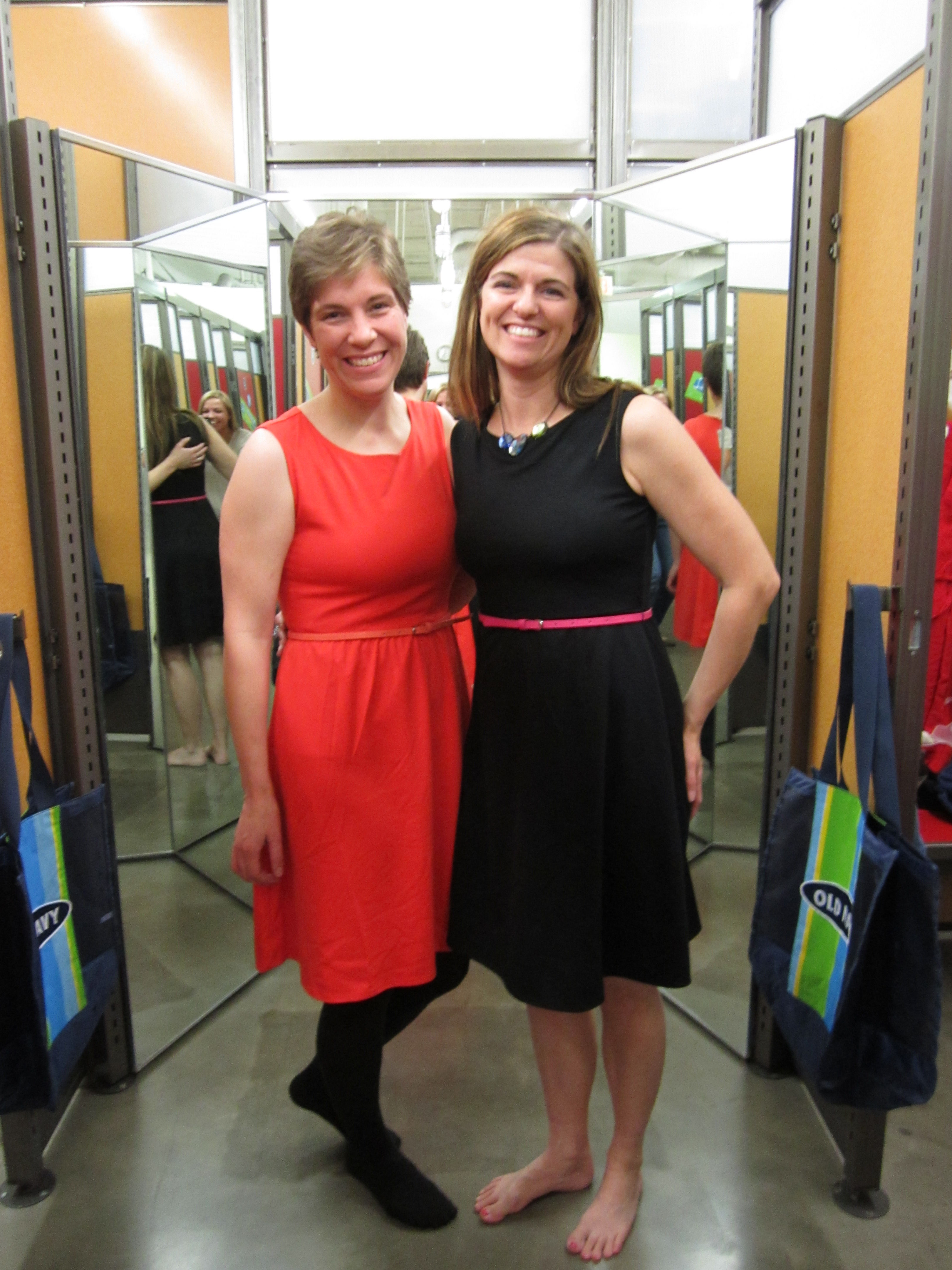
Wow, Old Navy brought another sample share in time for my birthday. Old Navy dresses are new and fun and definitely something to look into. 

There are four basic styles in their new winter line: fit and flare, sweater, jersey, and shirt. I hoped my sister-in-law would get a shirt dress that reminded me of the 70s with the pink and orange print, but she didn’t have anywhere to wear it. I love the orange fit and flare that I’m wearing in the photo, and I wore it again on my birthday to go out to lunch with friends. 

Another birthday flew by in the late part of November. I was busy writing another novel. Sometimes I wonder when I’m going to feel old, wonder when the numbers going up are supposed to bother me. I’m still in tiny numbers if you count my theory of “life begins at thirty.” 

Life is beautiful, and I feel more like that when I wear my new Old Navy dress! 

Image

Change

Sometimes, change is unavoidable. And I wonder if that is why so many people try to resist it. It also might have something to do with more than just wanting things to stay the same.

I know at some point we think that what is familiar is what is comfortable and that it can take a very strong force to move us. We get inertia to stick in our little ruts. 

Though I still wonder if there might be more to it. So many times we mark the first time and the last time. When we can point to the first time, even if we don’t necessarily know that it is something we want to continue, it gives context to the beginning. When we want change enough to overcome our current path, we mark the last time and move on. 

But some things we must take in stride. Things that are unexpected and for which we cannot plan. When we realize a last time passed without fanfare. When a missed first time becomes an only opportunity. 

[You might have expected something political here, but you can get commentary on that somewhere else today.] 

I’m over 15k into a new novel for NaNoWriMo. It’s exciting to dig into a new project. Yet there are always events hanging over our heads where we cannot make certain that the future can be exactly as we plan. It means we have to change. It means we have to act and react. Also, somewhere, to be thankful for that which we do have. 

Flowing Words

Some days they do; some days they don’t. I’m excited to say I’m coming up on 300 days of writing in a row at 750words.com. At a minimum daily count, that’d be over 222k words.

I’ve written more than that.

I actually joined that site a year ago yesterday. In the 367 days, I missed 12. My streak as of yesterday was 297 days. Yes, somehow I managed that through moving (Thanks, Mom!) and having a baby (always with the technical gadgets when he slept) and figured how I could do that minimum through my phone if I had to.

My fastest entry took 7 minutes to reach the goal, over 100 wpm. My 355 completed days have accumulated 344,110 words. The most I ever accomplished in a day was 4944 and makes me wonder why I didn’t push to the 5k mark. [Personal best writing day is over 8k – before I ever had children or found 750words.]

The site also tries to give insights into my writing, whether I’m feeling affectionate or thinking about death or if I use present tense verbs or what sense (read: vision) I’m using for description.

But that isn’t the information I turn to when I want to understand my writing better. Besides the words themselves, and there are a couple budding novels in there if I’m not careful – or maybe if I am. Some days it’s hard to tell. The information I gather lends more to understanding the process.

I learned I can type off the top of my head and still send words flying out of my fingers over 100 wpm. When I say they’re on fire, that’s pretty close. I learned I can type over 3000 words in an hour. That might seem like a modest 50ish wpm, but keeping it up for an hour or more is daunting.

My best time of day is the morning, but I can’t type in the morning because I’m busy with kids. So I almost always do my writing during afternoon naps. When I have to do it in the evening it takes longer, especially if there are distractions like the TV or my husband. [I told you I was writing. Go do something else until I’m done!] Longer often means five times as long, slowing me down to the average at this site, somewhere around 13 wpm when averaged with the distractions.

When I get warmed up and set a timer, I can shut out pretty much everything else. It’s really fun to just sit there and commune with the characters while they’re doing weird things.

So now I’m working on figuring out how to do that all the time. Because every now and then I end up with random brain dumps that, while helpful, aren’t exactly fueling my fiction word count. Except they do by getting the other stuff out of the way. It’s amazing how full the brain can get just going about your daily business.

I keep working to refine what I write, to learn more from this tool, to pursue more goals in my writing. It’s an ingrained habit for me, and whatever else it teaches me, that alone has been good enough to keep me at it.

Now what I need is a tool that makes me sit there and edit things on a daily basis. Because having the rough draft out only gets you so far. My drafts are improving, which means some of them are not complete dreck when I spew them out.

And today, when I sit down to write my words again, I’ll be figuring out something else to take time and make my words count. It doesn’t always have to be a race for speed. It’s about what I need to get out in order to do the writing I want to complete.

What tools do you use to keep your habits going for writing, editing, publishing, social media, other writer-type habits I’ve forgotten? Please share.
About the Eyes

I’ve been reading several books about children’s development, which makes sense since I have a 3 year old and a 3 month old. One of those books called attention to how adults and children may have different ideas about objects, with one reason being adults are much more likely to take in a visual aspect while children might be more inclined to taste or smell or touch or listen to it.

Actually, when you think about kids this just makes sense. Who knows what taste there might be on a pine cone? I bet a child would tell me. Probably also explains why so many parents are always screaming “Get that out of your MOUTH!”

But how does that translate into what we write? The majority of authors (especially in brick and mortar stores) are adults. We would then use a lot of visual description when we want it to be real to the readers.

I have a group of characters living on some far-off planet who don’t use their eyes. These nearly blind people can sense movement but not much else. It was such a difficult thing for me to describe things using their noses and ears as the primary senses and the visual as a distant fourth (behind touch). While I haven’t yet decided to have them put everything in their mouths to taste, I can’t promise anything about their futures.

What do you do to distinguish between characters? Do they all use their eyes as a primary sense?

I think if I were to catalog all the descriptive words in my current novel, most of them would be geared toward the visual. Makes me think I should look at that while rewriting. Yay! Just one more thing to edit and polish. I will finish it eventually, I swear. Though it might help to find less things I want to fix.

What Color Was That?

I started thinking about this as a friend of mine used a color to describe some different kind of person in his story. Jim Butcher had white, red, and black vampires in his Dresden Files. Jacqueline Carey used a deep blood red called sanguine for her character Phedre and to represent her distinguishing feature of being an anguisette. Vulcans from Star Trek have green blood. (Though doesn’t that make you wonder about a half-Vulcan half-Human – shouldn’t he not have either red or green blood? or both? I’m sure that’s another topic for another day…)

As long as we’re doing colors, why isn’t it cerise instead of just red or cerulean instead of just blue? I rarely hear anyone talking about aubergine. Is it the one syllable quality of red and blue and green that make them so common? Yellow simply doesn’t have the same impact. Yet it can’t simply be about the name, because pink will never have the impact of a neon orange – and that never rolled easily off anyone’s tongue.

When I ask someone’s favorite color, often I get a generic blue or purple or brown. The aforementioned aubergine ranks for one friend of mine, and another told me burgundy. It made me think about my own response, which is much more vague since I am fond of too many colors to pick just one. It’s very dependent on what it is for (a car or a purse or the walls of my bedroom)  and my particular mood.

How does color affect how you write? Do you search for a specific shade like chartreuse or will bright green work? Do you work to figure out the perfect color for everything or do you leave a few to the reader’s imagination?

Does having all that information conflict with your own ideas when reading? I’d love to know!

You Don’t Know Me Yet –

I had fun today. I finally connected to the writers in my new local area. It took me too long, but considering all the moving plus baby stuff, I think it was good to get there now – before the next move. (It’s just a little move from this temporary place into a house, but it’s still fraught with anxiety. All moves are.)

One of the things I love about writing groups is how being connected to them reconnects me to my projects. Another is hearing all the great things they bring to share.

They talked about a future meeting and it’s hard to realize we’ll be moving into our new home that day. I’m excited about the new house, but a little sad to be missing part of this group just as I connected with them.

Maybe I also needed a new perspective. I mean, I’ve been working on this piece and that for a while, and every group gives something a little different where feedback is concerned. And the new perspective makes me very excited to dig into the project again. If only I had time. I’m about to start packing for this next move!

They’re very encouraging, and I wonder how old they think I am. I get the feeling they don’t think I’ve done this much before, but I can’t be certain. The age groups seem to be either older or quite young. And by quite young, I mean two of them were about high school aged. Interesting, but good.

It also makes me feel a little more at home, now that I found where some writers congregate. It’s funny the things that make us feel like we’re in the right place, but that seems to be one of them for me.

But I think I know what I want to take next time I have a chance to write. And it’s exciting!

Character Introductions

How do you introduce characters? What is the important part about the introduction of a character, and what do you decide to say when to bring them in?

It’s always difficult to know. You want to introduce your protagonist among the very first, many times the very first character to show to your reader. Readers like to know what’s going on and care about someone who comes up. [Yes, there are several people who get away with doing it another way, but we’re going to stick with the mainstream for the moment. Pretend I’m not George R.R. Martin, ok?]

So if you have your protagonist firmly in mind, you want to introduce her to your reader. You choose something that shows who this is and why she is different and important and worthy of the reader’s time and attention.

Then you start the trouble and change things up for the poor protagonist until she can’t help but follow along with the plot.

But what about the others? How do you decide to put the other characters in? What about people who walk in and out for a little bit? It’s always good to think about that a while. Sometimes there’s an organic way to do it. A way to sprinkle the other characters in while the protagonist goes along with her story.

I have two characters that are giving me a little trouble. I introduce them early because they’re important. However, one of my critiquers thought I shouldn’t introduce one so early, and then another thought I should introduce the other earlier to show her importance.

I end up chewing over that kind of advance planning for the beginning. It seemed to make sense how I introduced them, but it’s possible it’s not quite in order. So I’m curious how other writers do it – do you decide to introduce them in a certain order or just when they come up? How do you decide in the rewrite if you’ve done it well enough? And does it matter if it’s a thousand words here or there to keep them flowing through?

Next time I might look closer at how they come through the story. This one is set in a fairly good order except for the two I mentioned. The two characters are important, though neither is the most important throughout the plot. It can all be put together in good time and I’ll have it figured out within the week.

It does give me a great deal to think about. There might be a million ways to introduce a few characters and I’m not sure I always give it as much thought as i could to make sure it’s done the right way and for the right reasons in the plot.

This kind of thought process has slowed my editing progress. I need to jump into a different chapter and stop worrying about those introductions for a little bit. How do you deal with it?

Stretching for Goals

I read Yoga Journal, and I found this quote:  “Failing is a part of success. To make goals effective, you have to fail at them 50 percent of the time, or they didn’t stretch you far enough.” Chip Wilson, courtesy of an article by Ella Lawrence called Set Your Course.

While I make goals and I keep track of them, I must not be stretching myself enough according to that standard. I often choose smaller goals and see if I can do more than just the minimum. I also realize that it isn’t possible to do everything I want to and have interest to attempt. Not even close. But I do prioritize and make an effort on the things that matter to me – though it is often something I know I can do if  I put a reminder in front of me.

So what is the change if I allow myself to fail at a goal here and there? It opens up a lot of possibilities. I can call it a work-in-progress and remind myself that there is wiggle room. Yet it’s also good to remember I only have a couple hours a day when I am doing things for me and not my children.

Writing takes up a lot of that time. I won’t apologize for it, because it’s what I love to do.

I’ve been struggling to get back to my daily yoga practice post-baby. Part of this is because I don’t have somewhere to go do it yet, and my toddler takes it as an invitation to use me as a jungle gym. It greatly increases the difficulty of a pose like Warrior I when you have a small child standing on your back leg.

My challenges this month are to go back to yoga every day and to edit a novel and to keep up my writing streak and prep another novel. Those are big goals considering my newborn is 7 weeks old. He just slept a little over 6 hours, which is called “through the night” by the professionals… and I woke before he did. Somehow I was wide awake and starving at 3:30 in the morning.

If this keeps up, I’ll have plenty of time to practice yoga when my children are sleeping. And edit my novel. Probably a bunch of other things, too, but six hours isn’t really enough sleep for me on a regular basis. While I can dream of things like bottling time, liquid sleep, cloning, and delegating roles to an army of bored people who procrastinate their time away, I know that we’re all given the same time and it’s what we do with it that sets us apart from the rest.

I don’t have time to be bored. If I finish those novel edits, I’m going to dive back into writing that novella I think I have a handle on completing. There’s always another project that I’d like to tackle – even if it’s just knitting another rug for the bathroom floor.

What do you do for your goals? How do you know you’re successful? What do you think of the 50 percent and stretching quote from Chip Wilson?

Plots and Characters

I’ve always taken a middle road on the plotting versus pantsing spectrum. I would argue for both sides as I have friends who manage both ways to varying degrees of success. That is not to say that there is any correlation between the success of those who write with full plots versus those who write off the cuff, but that each writer has a different degree of success with the method s/he chooses.

Lately I think I’m shifting more into a plotter. Okay, there’s no doubt about it. And the more I figure out the difference between figuring out a plot, the more I like it. Yes, the only part I loved about those little outlines with roman numerals was how nicely they lined up – the nerd in me has a sick fascination with overly ordered things like lined up books (alphabetized by genre, author, and title) in a bookshelf.

I know there is more than one way to plot. I wonder if many of the writers who say they don’t plot (yet there are inklings that their instinctual way of feeling through a story might be started off with organizing thoughts in a writer’s head) actually work through some of those issues but don’t formally write them down. For the rest, sometimes it’s about asking the right questions.

These questions are not just about plot. They’re also about characters and settings and anything else that makes it into the novel. One of the character templates a friend of mine loaned me always had a couple gaps though the questions themselves were exhausting. I’d pick and choose, but often I skipped things like “what would be in X’s wallet?” What does it matter? I’m in a fantasy universe and they don’t have wallets.

Maybe the point I should have been chasing was something broader. A wallet is often one of the things we won’t leave home without. We put things in it like identification and money and sometimes photos of our kids. We also grab keys, cell phones, and other items and stow them in our pockets or purses. [Or voluminous diaper bags – but that’s a different character.]

I’ve been checking into these and backing up. It might be the easiest thing to set down what the character physically looks like. An appearance trait that might even be changed down the road if I decide something else fits better. But the internal parts are not so easy to lay out on paper, and they’re also not as easy to change in a book. “Oh, Lucy isn’t recovering from an overdose of her mother’s guilt trips anymore because I decided her mother needed to not be in this book and I killed the character off.” So every reference to the mother needs to be removed, but also every time Lucy reacted to that guilt trip by doing something without her mother entering the scene. That rewrite would take significant effort to realize the changes in Lucy.

Also, I need to remember to put things in context for cultures if I make them up. It’s simply part of the world building that sometimes doesn’t make it to the character level. It’s one of the fun things about writing nonhuman characters, but also one of the challenges. What is fashion like for a race that doesn’t have a strong sense of vision? They rely heavily on sense of smell, so it makes me wonder if there are trends in scents, rather than colors. “Dogbreath is in this year. I think I’ll hibernate for the winter.” It just opens so many possibilities that hadn’t existed before.

I love world building. I worry sometimes that my races are too much to add into the fabric of the story, but it’s just too much fun for me. There are authors who have done it well, and I’m sure many more who have not that I simply haven’t read yet. As long as I don’t stop the action for info dumps, I suppose I’m not doing too bad.

The world building leads me back to the plot and the characters and the setting and all the rest. And as I’m looking at my worlds, I’m trying to stretch myself so I can ask the right questions and get the right answers in the beginning stages when changes are easy. Like if the character had to leave his residence in the middle of the night for some catastrophe (something on the order of a house fire), what would be the thing he couldn’t leave without? And not forgetting to find the unique voice of that character as we go. Because it’s different if he says “my firstborn” versus “I couldn’t leave without my beloved daughter.” And it’s knowing the difference that will make the novel great.