Adventures in Baking

I suppose baking might be labeled as a hobby for me. I love to make things from scratch – so long as it can be labeled a bread or a dessert. For some reason, dinner has never called to me that way.

I’m lucky to have joined a new DISH club where we get together for a couple hours once a month and go home with a dozen dishes to make later. The variety is pretty good, and while I might not have made these meals myself, I am enjoying the part about not having to think about it. I defrost it, cook it, eat it.

But that also leaves me open to pursue the baking front. My son’s birthday in January brought on a renewed love for it when I made my first from-scratch cake. It was a hot milk cake, and it was tasty, though it wasn’t picture perfect. I realized later that I made a mistake and overmixed part of it. It’s easy to do on a first attempt. I created two kinds of frosting for it, but I wasn’t really happy with either of them. The kids loved them.

I am pretty sure it was because I made the thing for company. Anything created for family automatically turns out beautiful because there isn’t anyone there to see it.

March brought birthdays for both my husband and my daughter. I know his favorite pie is rhubarb, and so I set out to make him one. Then I invited company, so I also made a chocolate mayonnaise cake (with brown sugar frosting). The problem was the pie bakes at different temperatures, and the second temperature was the same as the cake. So of course I put the pie in first, on the top rack.
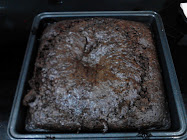
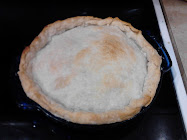
I didn’t realize the racks were too close together, and put the cake on the bottom. The pie dripped on the cake. The cake rose into the pie. When I went to move the cake, the rack ripped off the top where it had risen so beautifully. Talk about a mess. I didn’t know where to put the pie, because the bottom of the dish was covered with chocolate. The cake fell and created a nice depression in the middle I then tried to cover with the frosting. I was lucky they both tasted good. The pie was the ugliest I have ever made – the crust wouldn’t hold together for anything.
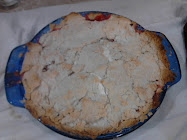
Two weeks later, I made a pie that my husband wouldn’t have to share with anyone but me. It’s beautiful, even though I did forget to create air vents in the top crust for it to breathe while in the oven. I’m sure it’s because it was just for us.
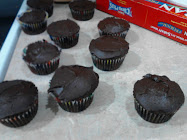
Yesterday my daughter got to bring in snacks for her birthday, and I set about making a bunch of cupcakes from scratch. She was adamant about them being chocolate, though she only once mentioned (to my mother) that she wanted chocolate raspberry. They’re chocolate raspberry cupcakes with coconut milk-based dark chocolate frosting and they’re a decadent delight. I shared them with her teachers, too, and my friends. At gymnastics tomorrow I will share some more, because her birthday party is on Saturday and I need to make something else to share at the party.

I ended up making the frosting the night before, but in the morning I had to shower and hurry because I didn’t realize I was nearly out of eggs. (Why didn’t I check that earlier than the morning I’m making cupcakes?) They’re pretty, but both my kids tried to put their hands in the beaters while I was mixing things. I finished only soon enough to get to preschool and not to do the art project like usual. However, everyone who has reported back so far has enjoyed them immensely. [I cannot find a link for the cupcake recipe, though it was from Taste of Home.]
For Easter I made beer bread to go with my father-in-law’s chili, but I forgot it when we left. It figures. Now I have beer bread to eat with various meals. No mix there, either, because beer bread is so simple once you learn the recipe.

I made Semlor, a Swedish Lenten treat, only once. The recipe I had called for fresh yeast instead of dry yeast, and that threw me off terribly until I researched the differences between them. I have a better handle on it, so I’m going to have to make it outside the regular season once my daughter’s birthday party is over. All the research has done is make me wish I could get active yeast at my local grocery store, but so far no luck.

Good thing I’m chasing two kids around most of the time or trying to write when they sleep, or I’d be up to my eyeballs in sweets. Novel update – Don’t Tell Your Mother has seven chapters left in this edit, plus the subplot is mostly written and needs to be inserted. It will be done soon!
Resistance

I don’t generally give myself enough time to find excuses to not work on something. However, I have noticed that I’m working on a lot of things that are not the one with the deadline that’s about to whoosh by. 

The deadline is of my own choosing, so it isn’t like I’ll be in too much trouble if and when it whooshes past. I just want to work on something else, something different, something new (read: shiny). 

The last few days I notice a lot of shiny ideas around me. They are taking over my brain space and making it difficult to concentrate on the editing. I feel like I’m really close to being done. But it isn’t quite there, and that’s difficult to force my head around. There have also been a lot of distractions from spring break: My daughter doesn’t have preschool, but instead the museum has interesting traveling exhibits like the Insect Zoo and Instrument Petting Zoo.

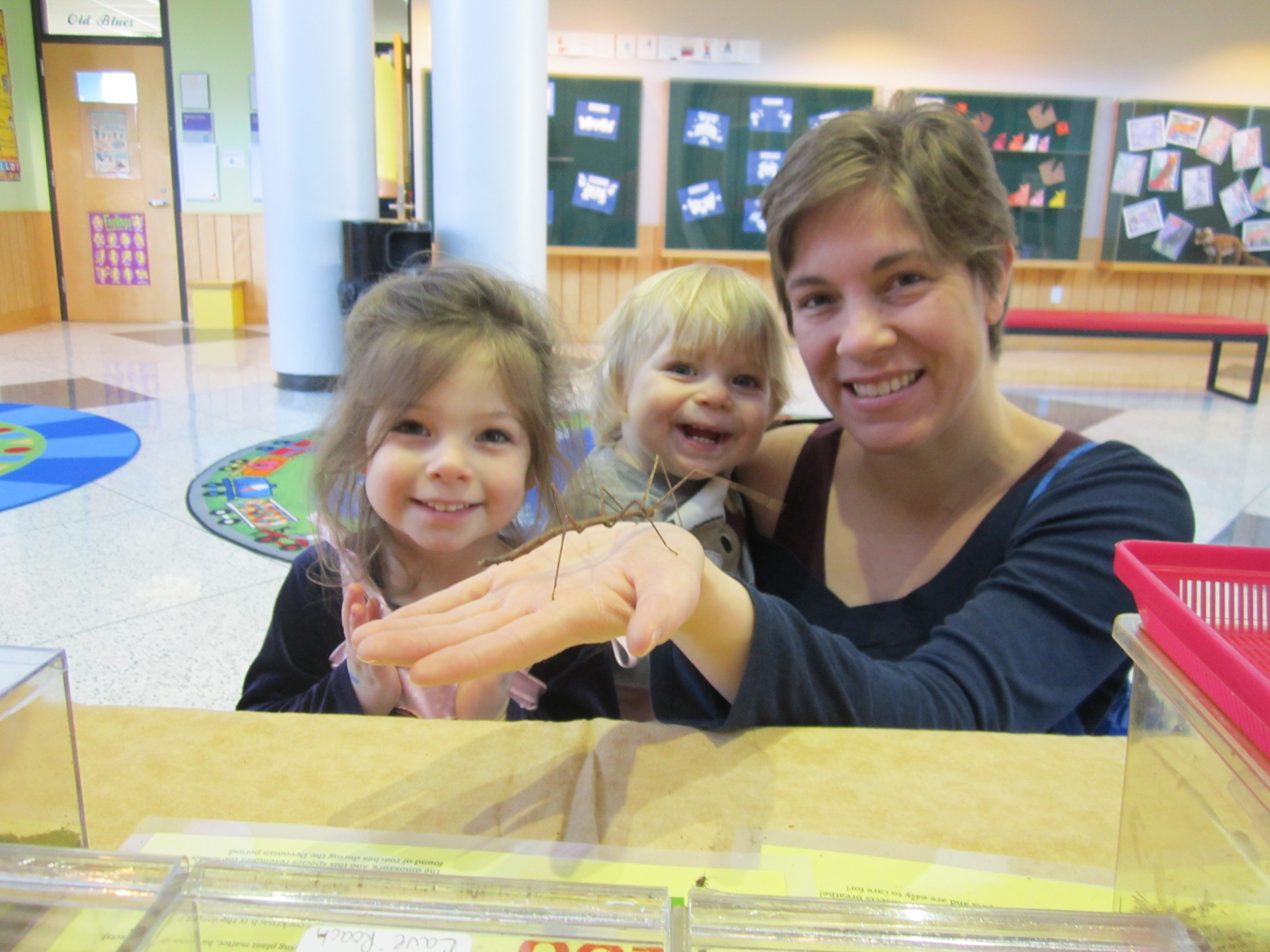
Maybe that doesn’t seem like a big distraction. I remembered my daughter loved bugs, but I didn’t realize that would be over four hours of my week devoted to large creepy-crawly creatures. This is me holding my son and a Vietnamese Walking Stick and my darling daughter standing close, who couldn’t get enough of the bugs. Image


I’ll be working with the resistance. I still want to finish this novel by Sunday (the darling girl’s birthday), but it might slip a few days. Whatever else happens, the time with the bugs was well spent. (And a big thank-you to the “bug lady” Ginny Morgal for taking this picture and explaining so many wonderful things about her bugs.)

Speaking of bugs, remember I love science fiction and fantasy? Those lovely creatures sparked even more shiny ideas that threaten to keep me from that last bit of editing! 

The what-ifs are piling in my notebooks, and they need to wait. I have a novel to finish! If you have any great ideas (or even just good ones) for tackling resistance to the project, I’d love to hear them.

Digging into Chapters

Today I started wondering what makes up a chapter. I’m working on my current project (because I still pretend I’m going to finish it by the end of the month), and I read through comments from a friend about how my chapters are short. That was the beginning chapter, then a few segments in (realizing all of the “chapters” are short) the comments were only on the ‘super short’ chapters.

How do we know how to say ‘end of chapter’? It’s not something that occupies me for the most part. I like to leave a cliffhanger ending if I can. There’s something about the pacing of the novel that just says where the ends ought to be. Or so I’ve always managed in the past.

But the comments started making me wonder about that. This particular project is young adult aimed at reluctant readers. When I put that into my thoughts, mostly the way I’ve done the chapters really fits the pace of the book.

Now I can put my chapters into all kinds of perspective. I can count them by number of words and decide that the math will tell me everything – in which case I have a few that are way too short. Average, minimum, maximum, and standard deviation all come into play. Interpretation is anybody’s game, though, so it only gives me more questions.

A good reminder to all the writers out there: fiction is not a game of numbers. 

Even more that is true if I think about all the books I’ve read: Which Twilight book was it that had four pages marked for the months like chapters and absolutely nothing written in them? The effect was clear about the passing of time where Bella had no recollection of events. Not that things didn’t happen, but she had completely withdrawn from life.

If a chapter can be as short as one sentence or as long as necessary, then why do we focus on such things as a magic number of words per chapter? It might be more effective to think about what a chapter needs to do. The chapter needs to make a point. The story needs to go forward.

Chapters have specific duties within a book. Start with breaking up the narrative. It’s hard to take an entire book in one sitting for most of us, and a chapter ending will be a place where a reader stops if possible. [And this is the best place to throw in cliffhangers!] In some third limited viewpoint books, a chapter break might herald another character viewpoint. Some give gaps for the passage of time or to change location.

It’s never perfect, and it never will be. Analysis only leads me to improve my work as long as I don’t get too far into the details. I’m sure I could eventually tweak all the chapters to be the exact same number of words, but that wouldn’t suit the project. It would be great to say they all need to be X number of words on average within .5 standard deviations. Yet that isn’t the part that really makes it something worth reading.

Each chapter I put down follows some inner voice in my head that this is where it needs to end. All of it is something that follows each different project to be a new whole. I wish I could quantify it more than that, but the answer is elusive. I can tell I’m not the only one – check  this article and the discussion here and here.

I have a rough draft of another book that I haven’t finished putting the chapter breaks into yet. The first piece turned out a longer than I originally intended, but that doesn’t mean I need to chop it into pieces. I’m still grappling with the entirety of it, and I’m sure it will come to me. 

How do you deal with chapters as writers and readers? 

Did I forget to mention I am a writer?

Sometimes I struggle with this in my day to day activities. People who have known me for a long time have seen me shift from one kind of career to another, but a lot of my new friends and acquaintances only see me as mom running my kids around. Funny, huh?

All right, I’ll say it out loud. I’m a writer. It doesn’t mean I don’t do a hundred other things a day. It doesn’t mean I don’t have other career paths. However, this is what I love to do and what you can find me doing when I have any spare time at all.

Spare time? That’s another funny concept. Time doesn’t create itself in moments that can be considered empty or spare. I make choices about how to spend my time. Every time the little darlings go to sleep, I go to work.

I know a lot of people who get ideas. Some of them try writing from time to time. Others are writers like me. There is a difference between the ones who write occasionally and those who are writers. The writers I know have to work through the tough parts. They take each piece and examine it thoroughly. They never stop pursuing those pieces of story until they’re polished.

So I have worked other places, doing many other things. I get that faraway look in my eye when an idea comes to me and try to remember it long enough to write it down. I try to only choose things that are fun. And all of it, from that Scentsy party  to the towers we build at the Family Museum to the random tidbits I read, contributes to my writing.

Of Ebooks and the Dreaded DRM

Some of my books have logged more travel miles than I have lately. I say this because a friend of mine borrowed my Harry Potter books, and she took one all the way to Sweden and back.

Another friend of mine visits my house and we trade a box full of books. I reserve a shelf for books that have been loaned to me that I haven’t finished yet so I know they’re not mine. I have a lot of books, and it is easy to see where people could get confused which ones actually belong to me. They cover most of the walls in my library/office, which is a 17′ by 17′ basement guest room.

One reason I have been so reluctant to invest in ebooks is the borrowing factor. Most of the books out there have something called DRM attached: Digital Rights Management. What it means to me is that a book is not just a book anymore. There are rules with what I can do with it. And I hate “buying” something that has so many rules attached.

Perhaps I ought to feel differently because I am a writer. I hope to one day be published in electronic form. (Don’t get me wrong – I’m published, but the ebook still hasn’t come out yet.) Right now, I have paper copies of my book. I can pass them out to people, sign them (another thing I want to see happen with ebooks), and the owners can pass them out to their friends.

What? Why would I want that? Because that is how we read. I have a book (and I want people to read it!), I pass it along, and suddenly my friends are all talking about this book that we’ve shared. It’s an experience we love or hate, but we have it in common.

I know that also means that my books might be pirated. But the pirates are not the ones who have trouble with DRM. They simply crack it and move on. But cracking the DRM does not necessarily make you a pirate. Or at least I hope not.

I keep thinking of buying an ebook like I buy a regular book. I want to do all the same things. I want to read it on my phone and not just my iPad. Or at my computer. Or from the netbook or on my ereader. I want to share them with my friends and family. I want to get authors to sign them when the opportunity presents itself.

Often I read the news about ebooks and somewhere will be shoved in a little tidbit like a customer couldn’t access her ebooks because her credit card had expired at the website. Wait, really? Does that mean someone no longer owns the books once the credit card expires? But they were bought, paid for, and read before. Just because someone doesn’t update a credit card number doesn’t mean the purchase is in any way revoked. Those horrid offenses against ebook buyers are slowly being fixed, but switching platforms might give you trouble. I might have an iPad now, but what happens if my husband (ever the fun tech gift buyer) gets me a tablet next time the way he’s threatening? [He might not see it as a threat, but I’ve gotten pretty attached to my iPad. Probably doesn’t help he gave me one for each of two birthdays in a row.]

Without a DRM, regular people can use ebooks much more like we use regular books. It’s really hard to see why that would be a bad thing.

Read this blog post

And here’s a petition to at least get the white house on the side of unlocking the DRM for the rest of us: Petition

The only way to move forward is to be vocal about what we want. The best way for it to come out is to be able to share the books across platforms, to swap with friends, to be able to get access wherever you might be. Would you stand for only being able to watch a movie in one room of your house? How about a board game that refused to work because you didn’t have brand specific paper and pencils to keep score? Why do we let this slide for our ebooks, if only because we haven’t gotten them disabused of the notion that they can tell us what we can do with our books and when and where? If we’re going to have a future in electronic formats, we need to have ownership.

More Research

Some days it seems like whenever I think I have things in line the way I like them, the dominoes fall down and I need to start over. 

I’ve mentioned 750words before in this blog. I’ve enjoyed the time there, but it looks like it might be time to move on to another site. The site had been free, but starting 1 March it will require a paid subscription. It isn’t much – only $5 a month or $50 a year. But it’s difficult to justify that when I could find the same thing free elsewhere. 

So I’m looking at other sites between now and the March deadline. I missed that with Duotrope, who also required paid subscriptions this year for the majority of its information. [The same subscription rate, even.] And while I loved browsing Duotrope for new markets, I don’t use it enough at this time to go with a paid subscription. The new FAQ at 750 words even said he doesn’t take it personally if the requirement doesn’t fit the writer’s needs – and mentioned a few possible suggestions for replacements. 

All of that ought to light a fire under me to get things edited (which is always my sticking point) and be ready to get them out there so I can be part of Duotrope and feel legitimate because I would be sending things out. 

Which reminds me of an essay I read recently in Write Good or Die – where the author [Kristine Kathryn Rusch] talked about discipline in a way that meant more than simply punching a clock to meet a deadline and get a paycheck. She made a lot of points about why people make it in what they’re doing, especially writing. It’s because we love to do it, and we love to get it right enough to make things happen. The things that need to happen are the ideas, writing, editing, promotion, and the things that we allow to happen that distract us from these goals. 

That essay still has me thoughtful, and it is likely I will read it a few more times until my brain gets the message that I think is in there. I know most of it. I sit myself down in the chair to write daily. Recently I’ve discovered that editing doesn’t come so easily and I need to change how I go about it and how I think about it. After so many years of writing fiction, I finally figured out how to do an outline that makes sense for me, so it can’t be a lost cause to put some more research and purpose into how I go about editing. 

I needed something else to squeeze into the quiet moments when my kids were sleeping, besides the yoga and Pilates books, the fiction I haven’t caught up with, and the never-ending outpouring of words for my own rough drafts. It’s no wonder most of my friends love to read – they’re the only ones who could understand how I get so lost in the worlds I create. 

Work, Success and Failure, and Dear Lucky Agent

They say if you do what you love, you’ll never work again. I’m sure nobody included housework in that count. Yet I still smile when Mom said I was going to work when I mentioned a blog post I needed to write in a timely fashion.

You can tell it’s a new year because I’m ramping up all the things I want to do and actually getting on a schedule. By March it will be a habit, and October will throw so many things my way (like getting ready for NaNoWriMo in November) that it will start to slide. I usually prefer to reassert the regular schedule of things in December, and I learned last year that taking time off from writing didn’t do me any good.

So I’m also challenging myself to send an entry to the Dear Lucky Agent contest from Writer’s Digest. The deadline is looming, but I think I have time. Mom’s here to help me out, and it’s so nice to actually get a little extra sleep – or time to write a blog post before bed.

For a long time I considered myself a writer: one who writes. I love to write and pour over the words on the pages and it celebrates my lifelong love of books. Lately I’m considering that I might simply be a novelist. I write novels. Even my short stories seem like they just want to turn into novels – or worse, series of novels.

That kind of commitment to a project isn’t the hard part. I have found ways to get the kids to sleep long enough to turn out one more page, one more chapter. It’s one way to push myself to learn to type wicked fast. I read this article that said you should learn to at least type 1000 words per hour, and I know I can do better than 3 times that fast (when making it up off the top of my head, not transcribing) when I focus. If I wrote longhand, which I tend not to if there is a computer within reach, I know I can type 100 wpm or better.

It’s the editing I need to work on. Unfortunately I don’t have 40 hours a week to put toward the writing and editing to get to the master status, but I do as much as I can with what I have.

I have a part-time job at the YMCA and I read one of the little quotes on the wall for the first time that said something about how you can’t achieve anything if you don’t first expect yourself to do something better. I think I’ll have to write it down next week. It’s absolutely true. If I never expected myself to do anything, it wouldn’t get done. However, I juggle the housework and two kids and a couple part-time jobs along with the writing. My best friend told me that I get an amazing amount of things done. I’m pretty sure it’s because I don’t give myself the choice to accomplish less.

I did write down this quote: “Failing is a part of success. To make goals effective, you have to fail at them 50 percent of the time, or they didn’t stretch you far enough.” Chip Wilson, courtesy of an article by Ella Lawrence called Set Your Course from Yoga Journal.

According to that idea, I do not challenge myself enough since I do not fail 50 percent of the time. There is a limit to how many challenges one can take on, and the line between “failing” and “overwhelmed” can be subtle to many of us. Maybe it isn’t about taking on more things, but taking on enough to do as much as you can. Instead of doing one task to a 100% level, you try two at the 90% level. When you get two to the 95% level, you take on a third and all three drop to 80%. Is 80% failing? That might depend on where someone sets the curve. I wonder if the word fail – failing – failure is what bothers us most. To admit we failed is to be defeated. It isn’t something that we allow to change us into something more. Every choice we make defines us in life, and every day reflects upon what has come before and ripples into what will be. A failure today might mean success at something else in the future, but if we don’t allow failure in any form we will never learn anything. Or maybe that’s the whole point. We are afraid to fail (as a society) so maybe that means we’re really afraid to learn.

What have you challenged yourself to do lately?

Resolutions

I find it so difficult to start a new year with resolutions, and yet I keep doing it. This year has been difficult because of a flu, so I allowed a delay for the start of all the new things I want to do. 

There are always things I want to do. There are a lot of things that don’t get done that I intend to do, but that’s just a regular day. Finally this week I dug out my notebook and made a list. All right, it might have been a shopping list in one column and a list of chores on the other side, but steno books are great for two-column lists and it helped me focus. 

The other thing I did was get out a composition book for each project I am working on. One of them is for reading books and notes on things that I read about writing or other things. It helps, though it is cumbersome to drag them all up or down the stairs. It makes me wonder why I can’t work on just one project at once. 

I’m also neck-deep in notes for a project I’ve been working on for three years. That doesn’t seem like a lot to say, but it feels like forever. I want this one off my docket and out for publication this year, so I need to keep moving on the notes front and rewrite the thing. [This one also adds a three-inch binder to the pile of composition books. I bet I look funny grabbing out my pile of books when the kids go to bed.]

No wonder I’ve simply been leaving them in the other room. The new habit to cultivate is to get one out every night and work on it. I also resumed my 750words a day. I missed one day this month, but it feels better to work out my little brainstorms that way. Missing last month I felt like I couldn’t focus on a thing (even though I gave myself the month off in order to get other things done – none of them really got completed).

More coming soon. Hope the new year is happy for you and that many good resolutions work their way into good habits.

Happy New Year with Old Navy!

Old Navy (through Crowdtap) was good to me in 2012. Just before Christmas, I got another go to try out the active wear.

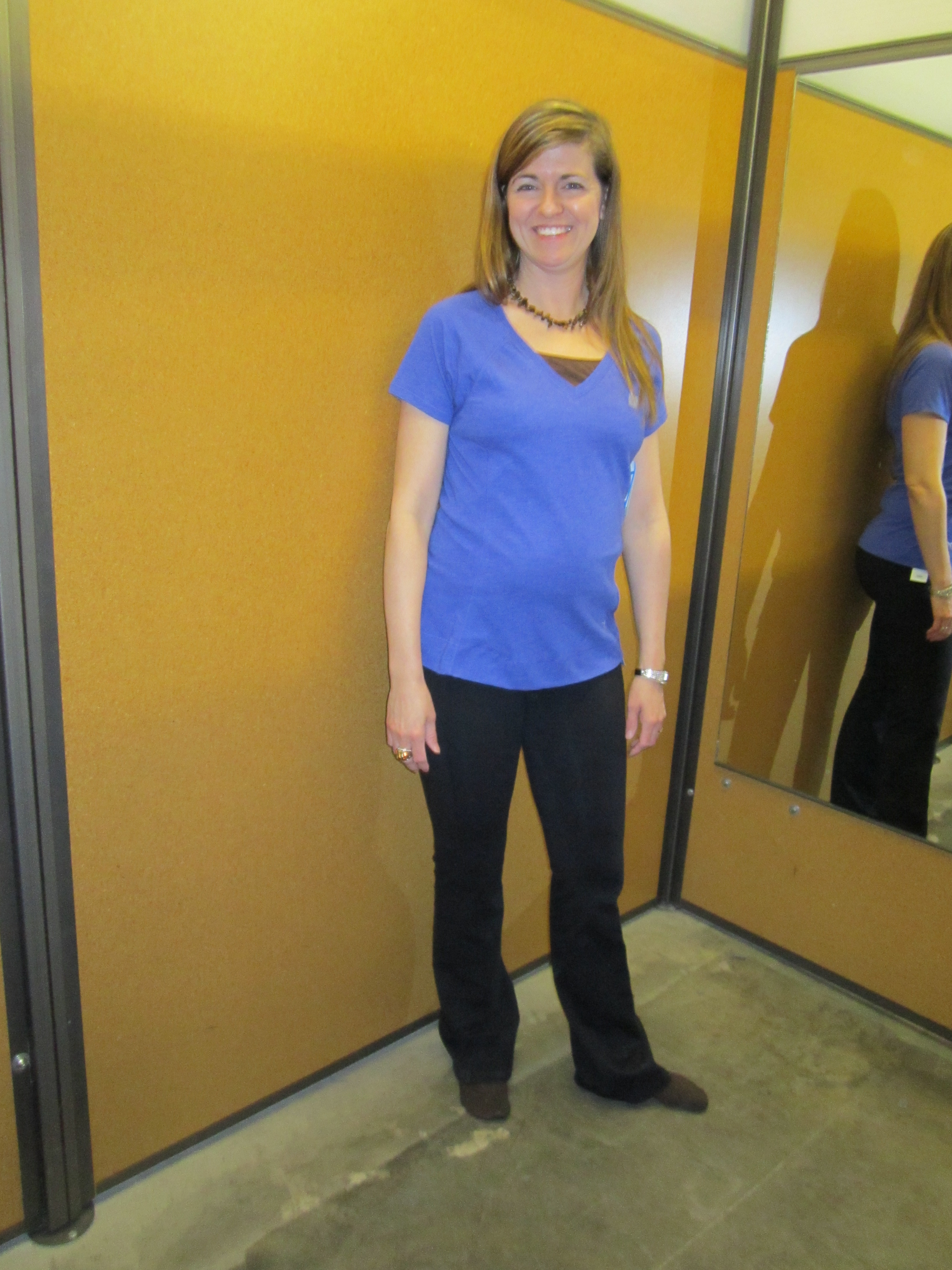
I love active wear. Especially from Old Navy! I’m a yoga teacher in my spare time, and it is really fun to go in dressed the part in something that fits and moves with me. I love the colors of their new tops, and I picked up a gray pair of pants.

Then it makes me wonder why it has taken me so long to get a pair of charcoal pants for yoga. I have black pants. So it is good to branch out a bit.

IMG_1336

My sister-in-law went with me, and she got a blue shirt and black pants. I haven’t talked her into joining me  for a yoga class yet, but now she’ll be dressed for the part.

IMG_1334

I’m excited to start the new year with new things to wear to my new yoga class! I’m going to post again soon about my new resolutions and what I’m expecting to accomplish with writing and yoga and all the other things I’m going to attempt.


NaNoWriMo

For me, November always means another novel with NaNoWriMo. During the month, there are plenty of things to read on both sides – writers who love it and writers who avoid it.

I don’t think it’s fair to say people hate it if they haven’t tried it. Part of it might be because of books like No Plot? No Problem! The challenge is to write 50,000 words in 30 days, and they recommend little to no preparation – to simply dive into a novel and write.

I think a lot of writers just dive into a novel and write in their first attempts.  I know I did for several – and the few I managed to finish in that time were in such disarray it has taken and will take me years to sort them out.

NaNo 2012 has come and gone, and I have a new novel to work on called The Next Jane. It weighs in at about 73,000 words. I hit 50,000 on Day 15, but the second half of the month presented challenges to keep me from hitting 100,000.

I know several writers who have embarked on sequels to a previous work and we are working toward using outlines and all kinds of preparatory work to make sure it is something that has a chance to be salvaged. I mean, we could have a nice romantic comedy going on and then have aliens land to get to the word count, but we’re reaching beyond that. Check out this list of published WriMos.

The beauty of the energy and the camaraderie of NaNoWriMo helps to turn off the internal editor long enough to get the rough draft out. You can challenge yourself to finish another scene, another chapter, another book. We post our word counts and compete with what we did the previous year. This year, I wrote more words than I have before in the month of November. I’m proud that I finished the entire draft of the novel, which was my goal in the first place.

The rest  can be fixed later. I’m fixing my last in-progress novel, and then I’ll be back with TNJ until I get it in order. I really want that one to be great. Plus, I have two sequels planned.